
Key Takeaways
- Strength training can support hormonal and metabolic health by improving muscle mass and insulin sensitivity, but it doesn’t directly balance hormones.
- Hormonal changes are normal throughout a woman’s life, so adopting healthy habits is key during these transitions.
- A balanced diet rich in protein, fiber, and healthy fats can enhance hormonal health and stabilize blood sugar.
- Managing stress and prioritizing recovery are essential aspects of supporting hormonal balance and overall well-being.
- Small, consistent lifestyle changes are more effective than drastic, unsustainable measures for achieving and maintaining hormonal health.
Estimated reading time: 9 minutes
If you’ve been paying more attention to your hormones lately, you’ve probably noticed how much information is out there.
Especially when it comes to exercise.
Maybe you’ve heard that lifting heavy can raise cortisol. Maybe you’ve been told that intense exercise is bad for your hormones. Or maybe you’ve started avoiding certain workouts because you’re worried about making a hormonal issue worse.
There’s a lot of confusion around this.
And one of the biggest misconceptions we see is that strength training and high-intensity exercise are the same thing.
They aren’t.
Understanding that difference is important, especially for women who are already thinking about stress, recovery, PCOS, perimenopause, menopause, postpartum changes, or their overall metabolic health.
Hormones Influence More Than You Think
Hormones are involved in nearly every major system in the body.
They influence metabolism, appetite, energy, blood sugar regulation, sleep, reproductive health, muscle and bone health, and your response to stress.
Your hormones also change throughout your life.
PCOS can affect hormonal and metabolic health. Pregnancy and postpartum bring major hormonal shifts. Perimenopause and menopause bring another significant transition.
You may notice changes in your energy, sleep, appetite, body composition, or how your body responds to exercise and nutrition.
That doesn’t mean you’ve suddenly done something wrong.
Your body is changing, and understanding those changes can help you make better decisions about how you support it.
Lifestyle plays a role here, too. UChicago Medicine AdventHealth notes that diet, exercise, sleep, and other lifestyle factors can influence hormone health. (uchicagomedicineadventhealth.org)
Strength Training Isn’t the Same as HIIT
Let’s talk about cortisol.
This is where a lot of women get nervous about strength training.
Exercise creates a stress response in the body. That’s normal. Cortisol can temporarily rise during exercise, including during resistance training.
But that doesn’t mean strength training is harmful to your hormones.
Strength training is not the same as high-intensity interval training.
A HIIT workout is designed to push your cardiovascular system very hard for short periods of time. Sprinting is high intensity. Certain CrossFit-style workouts can be high intensity. You’re moving quickly, your heart rate is elevated, and you’re intentionally working near your maximum effort.
A strength workout has a different purpose.
You lift a challenging weight.
You complete your set.
You rest.
Then you go again.
You can lift relatively heavy without turning the workout into a cardiovascular endurance session.
Heavy weight does not automatically equal high-intensity exercise.
That’s an important distinction for women who are concerned about stress and recovery.
At Sculpt, our strength workouts are structured around controlled resistance training. We want women to get stronger, build and maintain muscle, and challenge themselves without making every workout an all-out test of endurance.
You shouldn’t have to leave a workout completely wiped out for it to have been effective.
HealthCentral makes a similar distinction, noting that strength training doesn’t directly “balance” hormones such as estrogen or progesterone, but it can support factors closely connected to hormonal and metabolic health, including muscle, insulin sensitivity, and body composition. (healthcentral.com)
Why Muscle Matters for Metabolic Health
This is one of the biggest reasons strength training deserves a place in a woman’s fitness routine.
Your muscles are important for how your body uses glucose.
When you contract your muscles during exercise, they use glucose for energy. Regular resistance training can also improve insulin sensitivity and help your body handle glucose more efficiently.
Research in postmenopausal women has found that programmed exercise can improve measures of insulin sensitivity and metabolic health.
And as women get older, maintaining muscle becomes increasingly important.
Hormonal changes during perimenopause and menopause can be accompanied by changes in body composition and muscle mass. Resistance training can help women maintain strength and muscle during this stage of life.
This is why we talk about muscle so much at Sculpt.
It’s not just about lifting heavier weights or changing the way your body looks.
Muscle is part of your metabolic health.
Blood Sugar Is Part of the Conversation
Hormones and blood sugar are closely connected.
When you eat, your body releases insulin to help move glucose out of your bloodstream and into your cells. Your muscles are one of the major places where that glucose is stored and used.
This is another reason that building and maintaining muscle matters.
Your nutrition matters here, too.
A balanced meal that includes protein, fiber, healthy fats, and carbohydrates can help keep you satisfied and support healthy blood sugar regulation.
UChicago Medicine AdventHealth recommends focusing on nutrient-dense foods and including protein, healthy fats, and fiber as part of an overall approach to hormonal health. (uchicagomedicineadventhealth.org)
There isn’t a need to make food complicated.
Start by building meals that actually keep you full and give your body the nutrients it needs.
What About Cortisol?
Cortisol has gotten a reputation for being the hormone responsible for everything from weight gain to poor sleep.
It’s much more complicated than that.
Cortisol is an essential hormone. Your body needs it to respond to stress, regulate energy availability, and carry out normal functions.
The issue isn’t having cortisol.
The issue is how your body is responding to your overall stress load and whether you’re giving yourself enough time to recover.
Exercise is one form of stress. So are work, poor sleep, under-eating, emotional stress, and constantly running on empty.
That’s why your workout shouldn’t be looked at in isolation.
If you’re strength training a few times a week, eating enough, sleeping well, and giving your body time to recover, that’s a very different situation from doing intense workouts every day while barely sleeping and constantly restricting your food.
Recovery is part of training.
What Women Can Actually Do
There’s no single lifestyle change that will “balance” every hormone.
And if you have a condition like PCOS or you’re experiencing symptoms that concern you, it’s important to work with your healthcare provider. Lifestyle changes can support your health, but they aren’t a replacement for medical treatment.
For most women, though, the foundation is surprisingly straightforward.
Regular strength training.
Enough protein and nutritious food.
Consistent movement.
Quality sleep.
Managing stress as much as realistically possible.
Giving your body time to recover.
These habits won’t make every hormonal fluctuation disappear.
That’s not the goal.
The goal is to give your body the support it needs to stay strong and metabolically healthy through the changes that come with different stages of life.
You Don’t Need to Be Afraid of Strength Training
If you’ve been avoiding strength training because you’re worried that lifting heavy weights will automatically spike your cortisol or negatively affect your hormones, it’s worth looking at the bigger picture.
Strength training is not HIIT.
Don’t be scared to lift heavy! You will not get bulky, you won’t throw your hormones out of wack. You only have things to gain from strength training.
Want to Learn More?
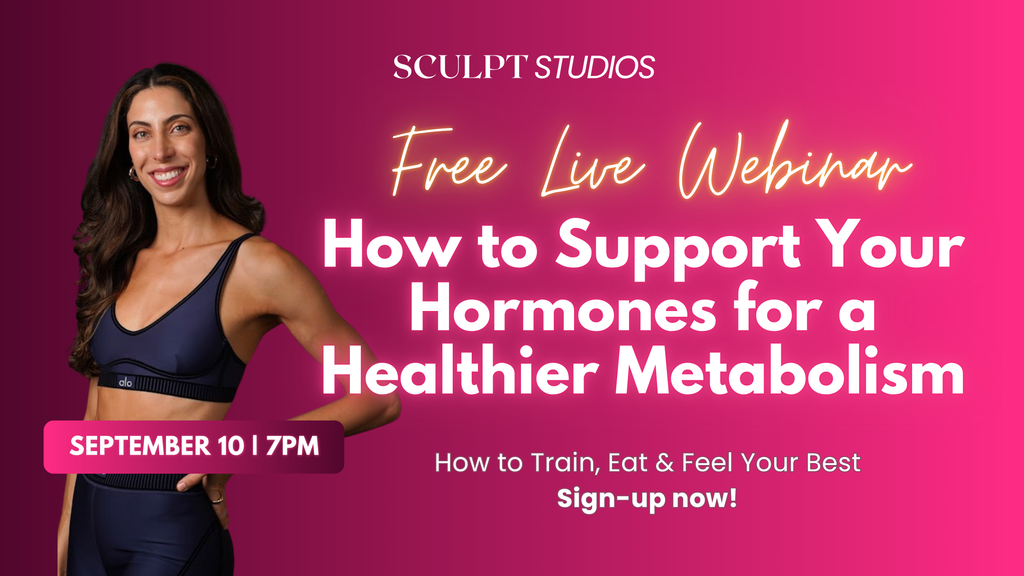
If you’ve been wondering whether your hormones could be affecting your metabolism we’re going deeper in our upcoming FREE LIVE WEBINAR:
How to Support Your Hormones for a Healthier Metabolism
Whether you’re navigating PCOS, high cortisol, perimenopause, menopause, postpartum changes, or simply feel like your body isn’t responding the way it used to, this webinar is for you.
We’ll help you understand what’s happening in your body and give you a practical strategy for supporting your hormones and metabolic health through the things you can actually control.
📅 September 10
⏰ 7:00 PM
Register FREE here:
https://sites.leadconnectorhq.com/preview/7vSBkl7VLtq2C8MTpLRi?notrack=true
Ready to Take the Next Step?
If you’re ready to lose fat, build muscle, and create healthy habits that last, we’d love to help.
Book your free consultation and chat with one of our expert coaches about your goals. We’ll help you find the program that’s the best fit for you, whether you’re looking for in-person training at our Royal Oak or Plymouth studios or 1:1 online coaching from anywhere.
Book your free consultation here:
https://sculptstudios.co/book-a-consult/
Sources
- UChicago Medicine AdventHealth. How to Balance Your Hormones Naturally.
https://www.uchicagomedicineadventhealth.org/blog/how-balance-your-hormones-naturally - HealthCentral. Can Strength Training Help Balance Hormones?
https://www.healthcentral.com/womens-health/can-strength-training-help-balance-hormones - Fertility Center of San Diego. 6 Expert-Approved Tips to Reset Your Hormone Health From Dr. Li-Shei Lin.
https://www.fertilityclinicsandiego.com/fertility-blog/6-expert-approved-tips-to-reset-your-hormone-health-from-dr-li-shei-lin/ - Empire OBGYN. Balancing Hormones Naturally for Women.
https://empireobgyn.com/balancing-hormones-naturally-for-women/ - González-Gálvez et al. Resistance training effects on healthy postmenopausal women: a systematic review with meta-analysis. Climacteric, 2024.
This is a particularly good addition because it specifically evaluates resistance training in postmenopausal women. - Martins Sá et al. Resistance training for postmenopausal women: systematic review and meta-analysis. Menopause, 2023.
This review looked at randomized trials and found evidence for improvements in functional capacity and some menopausal outcomes, while also noting that the certainty of evidence was low to very low for several outcomes. - Bueno-Notivol et al. Effect of programmed exercise on insulin sensitivity in postmenopausal women: a systematic review and meta-analysis of randomized controlled trials. Menopause, 2017.
This one is especially useful for your blood sugar + metabolism angle. The review found that 3–4 months of exercise significantly improved several insulin-sensitivity and body-composition measures in postmenopausal women. - Isenmann et al. It’s never too late: The impact of resistance training on strength and body composition in females across the lifespan — A systematic review and meta-analysis. Journal of Science and Medicine in Sport, 2026.
This is a great current source because it included 126 studies and more than 4,000 women and found resistance training improved strength and body composition across both pre- and postmenopausal women.
Check out these related artciles…