
A lot of women tell us they’re avoiding strength training because they’ve heard things like:
➡️ “Weight training spikes your cortisol,”
➡️ “That’s too intense for my cortisol levels,”
➡️ “I’ll stick with Pilates because it’s low intensity.”
Let’s break this down with what science actually shows — and it may surprise you.
1. Not All Exercise Is Created Equal
There is a relationship between exercise intensity and cortisol — but it’s not a blanket rule that all gym work is “high intensity.” Hormone responses depend on how hard the activity is, not simply the label.
A controlled scientific study looked at cortisol responses to resistance exercise performed at different intensities. When people performed resistance sessions at high intensity, their salivary cortisol levels spiked significantly — nearly doubling immediately after exercise. In contrast, the low intensity resistance session caused no significant cortisol change immediately following exercise.
This means that intensity matters — but there’s some misconceptions about what “high intensity” actually is…
2. There’s a Threshold Where Cortisol Rises
Research measuring cortisol at different exercise intensities found that low‑intensity exercise (around 40% VO₂max) doesn’t increase cortisol and may even reduce it, whereas cortisol reliably rises with moderate to high intensity.
That’s exactly why walking, gentle Pilates, or strength training with moderate loads and rest between sets doesn’t trigger the same stress response as sprinting, long fast runs, or HIIT workouts. The body doesn’t interpret them in the same way.
3. Cortisol Isn’t the Enemy
Cortisol gets a bad reputation as the stress hormone — but it’s essential for energy regulation and recovery during activity. Temporary rises during exercise are normal and part of how your body fuels movement. It’s when cortisol remains chronically elevated (from inadequate recovery, lack of sleep, or extreme training without rest) that we start to see negative effects.
So a short, controlled uptick in cortisol during a moderate strength session isn’t a sign your workout is “bad” — it’s a normal physiological response.
4. Strength Training Is Not High‑Intensity
When people talk about avoiding “high intensity,” they’re usually referring to things like:
- Sprint intervals
- CrossFit‑style training with minimal rest
- Max‑effort HIIT sessions
Those styles of training are designed to keep your heart rate near max and will raise cortisol acutely, just like any very demanding physical stressor.
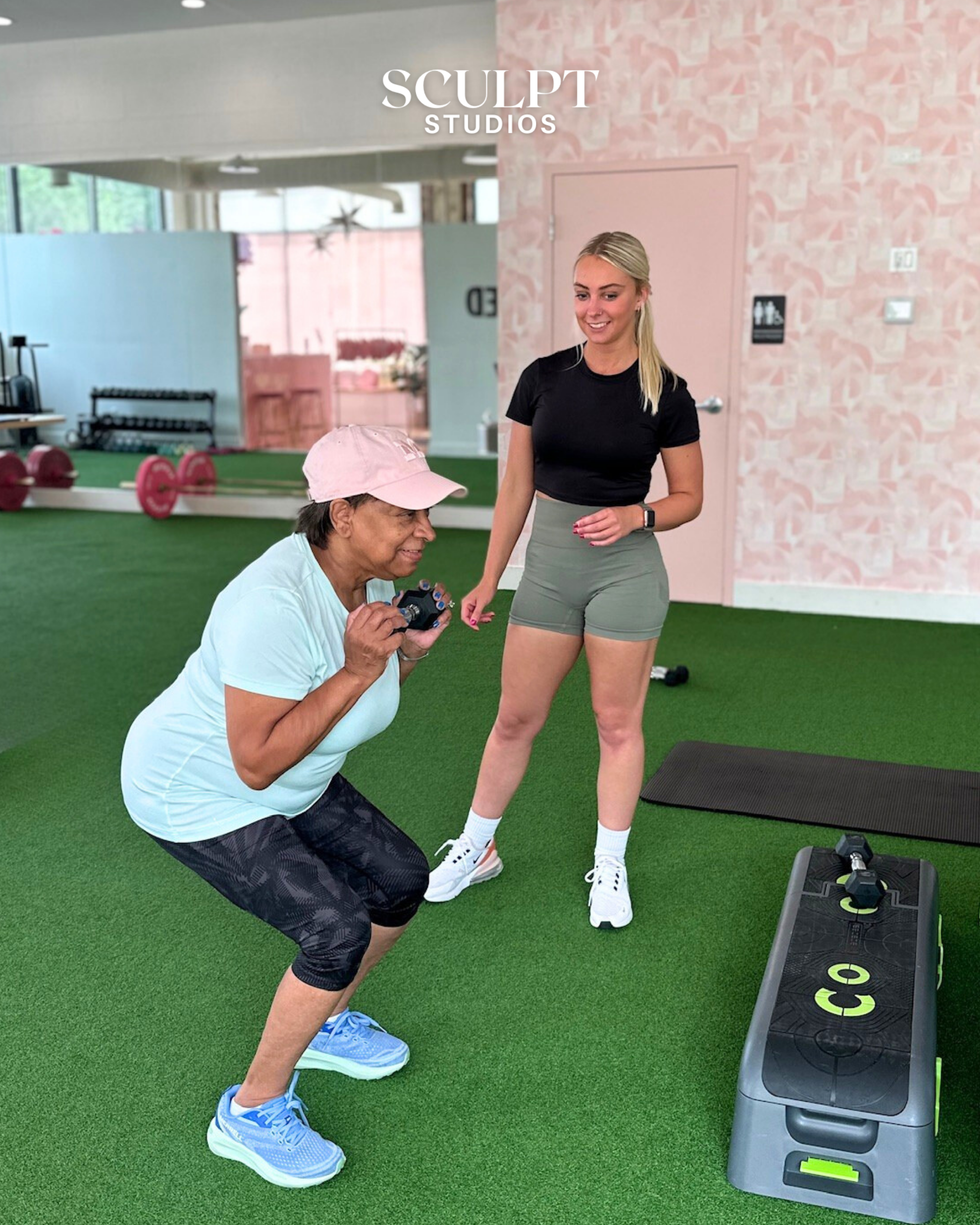
But traditional resistance training, especially when done with rest between sets like we do at Sculpt and controlled pacing, does not act the same way.
5. That Difference Matters for Hormone‑Sensitive Populations
Women going through perimenopause, menopause, PCOS, or other hormonal challenges do have unique stress system sensitivity. Constantly chasing intense, high‑effort sessions without sufficient recovery can exacerbate fatigue and hormone imbalance. But controlled strength training paired with low‑intensity movement like walking does not provoke the same stress response — and in many cases supports better hormone balance long term by improving sleep, metabolism, and recovery processes.

Bottom Line: Weight Training ≠ High Intensity Stress
Here’s the key takeaway:
Weight training — when done in a controlled, traditional way with moderate loads and proper rest — does not function like high intensity interval training or cardio in terms of cortisol response.
That’s why:
✅ Traditional strength training helps regulate hormone responses.
✅ Pilates, walking, and strength can both be low‑stress and beneficial.
✅ It’s intensity and volume — not the equipment — that determines how your hormones react.
If you’ve been avoiding weight training because you’re worried about cortisol spikes, it’s time to reframe that belief. Strength training is not inherently “too intense” — and done right, it’s an excellent tool for women’s health, longevity, and balance.
Sources
Hill, E. E., Zack, E., Battaglini, C., Viru, M., Viru, A., & Hackney, A. C. (2008). Exercise and circulating cortisol levels: the intensity threshold effect. Journal of Endocrinological Investigation; demonstrating that low‑intensity exercise does not raise cortisol levels significantly, whereas moderate‑high intensity does. https://pubmed.ncbi.nlm.nih.gov/18787373/ https://nutrition-evidence.com/article/115073/exercise-and-circulating-cortisol-levels-the-intensity-threshold-effect?utm_source=chatgpt.com https://www.mdpi.com/2075-1729/15/12/1872?utm_source=chatgpt.com https://www.frontiersin.org/journals/endocrinology/articles/10.3389/fendo.2024.1437452/full? https://www.journalofexerciseandnutrition.com/index.php/JEN/article/view/108?utm_source=chatgpt.com https://pubmed.ncbi.nlm.nih.gov/34175558/