
Your body feels different. Your old routine isn’t working the same way. Here’s what you need to know about perimenopause, menopause, nutrition and strength training. In this article, we’ll explore how weightlifting benefits perimenopause and menopause women and why strength training can make such a difference.
Are you in your 40s or 50s and wondering why your body suddenly feels different?
Maybe you’re gaining weight around your middle, even though your habits haven’t changed much.
Maybe your sleep is all over the place. Your energy is lower. Your workouts feel harder. Or you’re dealing with hot flashes and mood swings you never expected.
And you’re thinking, What is happening to my body?
First, you’re not alone.
Perimenopause and menopause bring real changes. But there’s a lot of confusion about what those changes mean, what causes them and what you can actually do about them.
Let’s break it down.
1. Why Does Your Body Feel So Different?
During perimenopause, your hormone levels fluctuate. Eventually, estrogen levels decline as you reach menopause.
These changes can affect much more than your menstrual cycle.
Sleep. Mood. Body composition. Muscle. Bone health. Energy.
The experience is different for every woman. Some notice significant symptoms. Others experience very few.
According to The Menopause Society, changes during this transition can include sleep disturbances, mood changes, weight gain and changes in how your body distributes fat.
So if you’ve noticed something feels different, there may be a reason.
The important part? Understanding what’s changing gives you a better starting point for deciding what to do next.
2. What’s Happening to Your Metabolism and Belly Fat?
Let’s talk about one of the biggest frustrations women bring up during perimenopause and menopause.
Belly fat.
You might feel like you’re eating the same foods, exercising consistently and doing everything you’ve always done. Yet your body seems to be changing anyway.
Part of the explanation is hormonal.
Declining estrogen can influence where your body stores fat, with a tendency toward more abdominal fat during the menopause transition. Aging, changes in muscle mass, activity levels, sleep and other lifestyle factors can contribute, too.
A 2024 systematic review and meta-analysis published in the Journal of Sport and Health Science examined resistance training in postmenopausal and older women.
The researchers reported improvements in body fat, metabolic risk factors and inflammation compared with control groups.
That’s encouraging.
But here’s what it doesn’t mean: that one workout, one food or one supplement will eliminate belly fat.
You can’t choose where your body loses fat. And menopause doesn’t make weight management impossible.
What you can do is build habits that support your metabolic health, maintain muscle, improve your overall fitness and help you work toward your goals.
You may need a different approach. Not a more extreme one.
3. Why Strength Training Matters More Than Ever
If there’s one area worth paying attention to during midlife, it’s strength.
Muscle helps you move, lift, carry, balance and stay independent as you age. Maintaining it also supports your metabolic health.
And then there’s bone health.
Declining estrogen contributes to bone loss during the menopause transition. Resistance training and other weight-bearing activities can help support bone strength.
Research published in Climacteric in 2024 reviewed studies on resistance training in postmenopausal women. The findings supported benefits for physical strength and other health measures.
So what does this mean for your routine?
It means strength training deserves a place in your week.
Not because you need to change your body to look a certain way.
Because building and maintaining strength helps support the body you’re going to rely on for decades to come.
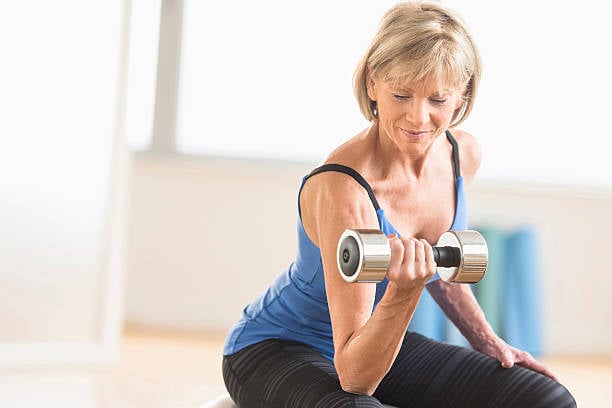
You don’t need to start with super heavy weights or spend hours lifting.
With just two or three hours a week you can get some amazing results.
4. Can Nutrition Help With Menopause Symptoms?
Yes, nutrition matters. But it’s important to understand what it can and cannot do.
Your eating habits can support blood sugar regulation, cardiovascular health, muscle maintenance and weight management.
That doesn’t mean a particular food or diet will cure your menopause symptoms.
It means the way you eat is one part of the bigger picture.
Here are a few places to start.
Prioritize protein.
Protein provides the building blocks your body needs to maintain and repair muscle. Include protein-rich foods in your meals, especially if you’re strength training.
Get enough fiber.
Vegetables, fruit, beans, lentils and whole grains provide fiber that supports digestive and metabolic health.
Build balanced meals.
Combining protein, fiber-rich carbohydrates and healthy fats can help you create satisfying meals that support your nutritional needs.
Pay attention to added sugar and alcohol.
You don’t need to eliminate entire food groups. Instead, look at your overall habits and how different choices affect your energy, sleep and health goals.
What about hot flashes?
Some women notice that alcohol, caffeine or certain foods trigger their symptoms. Paying attention to your individual patterns may help you identify triggers.
5. What About Hot Flashes, Mood Swings and Sleep?
These symptoms can have a real impact on everyday life.
Hot flashes can interrupt your sleep. Poor sleep can leave you feeling exhausted, irritable and less able to concentrate. Mood changes can make an already demanding season of life feel even harder.
It’s all connected, but that doesn’t mean every symptom has the same cause or solution.
Exercise supports overall health, sleep quality and mood. A consistent sleep schedule, regular physical activity and attention to alcohol or caffeine habits may also help some women.
What about strength training and hot flashes specifically?
A 2024 meta-analysis titled The Effect of Resistance Training in Reducing Hot Flushes in Post-Menopausal Women found that resistance training was associated with reductions in hot-flash frequency and severity across five included studies.
That’s an interesting finding. But the evidence is still limited, and other reviews, including guidance from The Menopause Society, have concluded that exercise has not been established as a reliable treatment for hot flashes.
The takeaway? Strength training is worth doing for its many established health benefits, but it shouldn’t be promised as a cure for hot flashes.
If hot flashes, night sweats, insomnia or mood symptoms are affecting your quality of life, talk with a healthcare professional about your options. Effective medical treatments are available, and you don’t have to simply put up with symptoms that are disrupting your life.
6. You Have More Control Than You Think
It’s easy to feel frustrated when your body changes.
You might feel like you’re doing everything right and still not getting the results you expect.
You might be tired of trying another diet, another workout or another plan that doesn’t seem to fit your life anymore.
But you aren’t powerless.
You can learn how to train in a way that supports your strength. You can make nutrition changes that support your health. You can build sustainable routines around movement, recovery and sleep. And you can seek help for symptoms that need more than lifestyle changes alone.
You don’t have to change everything overnight.
Start with the basics. Get the right information. Find a plan that works for you.
And give yourself some credit for showing up during a stage of life that can bring a lot of change.
At Sculpt Studios, we believe women deserve to understand their bodies and feel supported as they navigate every stage of life.
That’s why Nicole is so passionate about this topic. Over the years, she and our coaches have helped women better understand their bodies, adjust their training and build nutrition habits that support their individual goals.
Because the goal isn’t to fight your body.
It’s to understand it and learn how to support it.
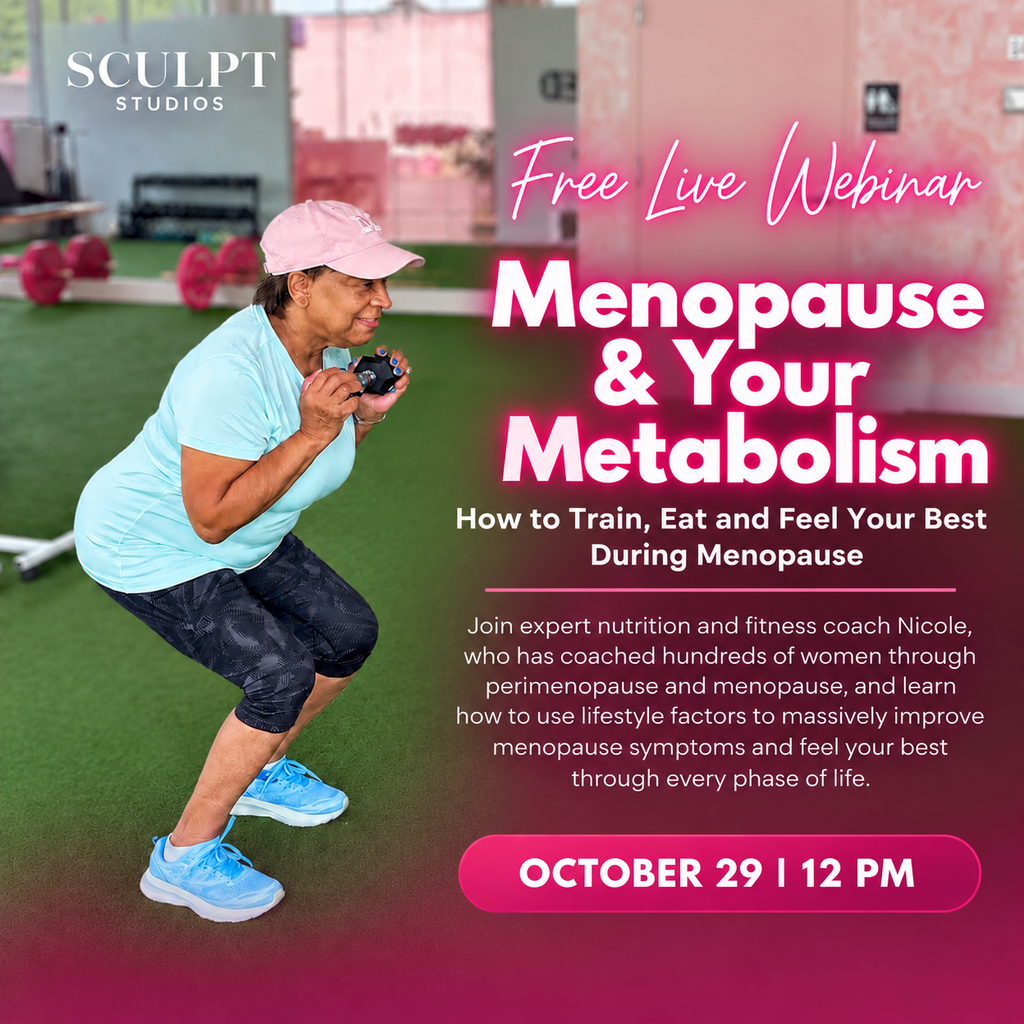
Join Us for Our Free Live Webinar
MENOPAUSE & YOUR METABOLISM
Are you going through perimenopause or menopause? Join Nicole for a free live webinar about what’s changing in your body and how to support your health through this transition.
We’ll break down metabolism, strength training, nutrition and practical lifestyle strategies you can start putting into practice.
📅 October 29 at 12 PM
Save your spot here: https://sites.leadconnectorhq.com/preview/I7RTSSwnhJQXoCBi3bxJ?notrack=true
Come with your questions. Leave with a better understanding of your body and the steps you can take to support it.
Sources & Further Reading
- The Menopause Society. “Symptoms.” Overview of common menopause symptoms and how experiences vary.
https://menopause.org/patient-education/menopause-topics/symptoms - Nunes, P. R. P., et al. (2024). “Effect of resistance training volume on body adiposity, metabolic risk, and inflammation in postmenopausal and older females: Systematic review and meta-analysis of randomized controlled trials.” Journal of Sport and Health Science, 13(2), 145–159.
https://pubmed.ncbi.nlm.nih.gov/37788790/ - González-Gálvez, N., Moreno-Torres, J. M., & Vaquero-Cristóbal, R. (2024). “Resistance training effects on healthy postmenopausal women: a systematic review with meta-analysis.” Climacteric, 27(3), 296–304.
https://pubmed.ncbi.nlm.nih.gov/38353251/ - Choudhry, D. N., et al. (2024). “The effect of resistance training in reducing hot flushes in post-menopausal women: A meta-analysis.” Journal of Bodywork and Movement Therapies, 39, 335–342.
https://pubmed.ncbi.nlm.nih.gov/38876649/ - The Menopause Society. “Hot Flashes.” Evidence-based information on treatment options and the limitations of lifestyle interventions.
https://menopause.org/patient-education/menopause-topics/hot-flashes - University of Michigan Medicine. “Nutrition Considerations for Perimenopause and Menopause.” Practical guidance on protein, fiber, body composition and healthy habits.
https://www.med.umich.edu/1libr/Nutrition/PerimenopauseMenopauseNutrition.pdf